
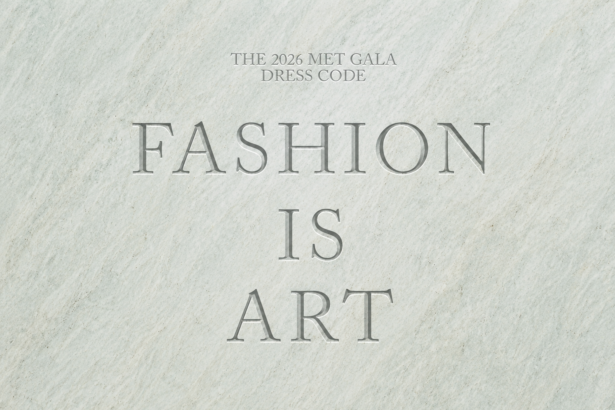
The Met Gala is easy to misread. From a distance, it looks like spectacle. Up close, it is negotiation. Not just of style. Of legitimacy.
When Irene Lewisohn founded the Museum of Costume Art in 1937, she wasn’t simply creating an institution. She was challenging a hierarchy. At the top sat painting and sculpture, canonised, intellectualised, preserved. Fashion existed below, dismissed as feminine, seasonal, commercial. Beautiful, but not serious.
That hierarchy was never neutral. It mirrored deeper biases about gender, labour, and what kinds of creativity deserve permanence. A painting is framed and protected. A dress is worn, used, and discarded. One is seen as thought. The other as surface.
So when the museum entered the Metropolitan Museum of Art, the inclusion came with a quiet qualifier: prove your worth. Fund yourself. Sustain yourself. The Costume Institute was not just a department. It was a test. And tests change behaviour.
They force strategy where there might have been purity. They create systems where there might have been spontaneity. The Met Gala, born out of Eleanor Lambert’s 1948 fundraiser, is often remembered for its transformation. Less examined is its origin as obligation. It exists because fashion had to justify its existence every single year.
There is something profoundly modern about that. Entire industries today operate under similar conditions. Constant visibility. Constant performance. Constant proof. But what makes the Met Gala unique is how it turned that pressure into narrative.
Under Diana Vreeland, the conversation shifted from validation to authority. She understood something subtle but powerful: institutions do not grant legitimacy. They respond to conviction.
So she stopped explaining fashion and began staging it. Not as clothing, but as context. Not as trend, but as time. Her exhibitions didn’t ask the viewer to admire. They demanded interpretation. This is where the nuance deepens.
Because once fashion entered the museum, it didn’t just gain respect. It also accepted containment. To be archived is to be frozen. To be curated is to be edited. The museum legitimises, but it also controls.
And the Met Gala becomes the counterbalance to that control.
If the museum preserves, the Gala performs.
If the archive fixes meaning, the red carpet disrupts it.
Every year’s theme, shaped by curators like Andrew Bolton, sits at this intersection. It is intellectual on paper, but unstable in execution. Open to interpretation, misinterpretation, even resistance. This is why the Gala often feels chaotic.
Because it is not just about dressing to a theme. It is about negotiating it. Celebrities, designers, stylists, and brands are all participating in a layered exchange. Between art and commerce. Between individual expression and institutional framing. No look is innocent.
A gown can be homage or appropriation. A silhouette can signal rebellion or compliance. Even excess itself becomes language. Who can afford to be extravagant? Who is expected to be restrained? Who is allowed to take risks without consequence?
Power is not just in attendance. It is in interpretation.
This is where Anna Wintour’s role becomes more complex than control. Yes, she curates the room. But more importantly, she curates the ecosystem around it. Designers, celebrities, media, sponsors, cultural capital all converge into a single, hyper-visible moment.
It is not just exclusivity. It is orchestration.
And orchestration creates illusion. The illusion that this is a spontaneous celebration of fashion, when in reality it is a highly structured negotiation of influence.
Even the so-called “rules” reveal deeper intent. No phones inside is not just about privacy. It is about controlling narrative flow. Separating the public performance from the private exchange. What is seen versus what is remembered. The red carpet is documentation. The dinner is power. And then there is the question of inclusion.
Moments like Shah Rukh Khan’s appearance signal expansion, but they also highlight how late that expansion arrives. Fashion may now speak the language of diversity, but access to its most powerful rooms is still mediated. Still filtered. Still negotiated.
Inclusion here is not a given. It is a milestone. Which brings us to the deepest tension of all.
The Met Gala exists to fund a department that once struggled for legitimacy. It now raises tens of millions in a single night. It has succeeded beyond measure. And yet, it still operates on the same fundamental premise.
Prove your value. Every year. Perhaps that is why it remains so compelling.
Because beneath the spectacle is a familiar human pattern. The need to be seen. The effort to be understood. The quiet, persistent work of turning something dismissed into something undeniable.
The Met Gala is not just about fashion becoming art.
It is about what it takes for anything to be taken seriously.
